The ears are adorned by hearing the words of the Messenger of Allah ﷺ.
وَلاَ حَسَنٌ إِلاَّ سَمَاعُ حَدِيثِكُمْ …. مُشَافَهَةً يُمْلَى عَلَىَّ فَأَنْقُلُ
“Nothing is truly beautiful except hearing your narrations firsthand —
received directly from your lips, dictated to me, and then faithfully transmitted by me.”
This is a verse from the poem Gharami Sahih (“My Love Is Authentic”) by Ibn Farh al-Ishbili (d. 699 AH / 1300 CE), may Allah have mercy on him.
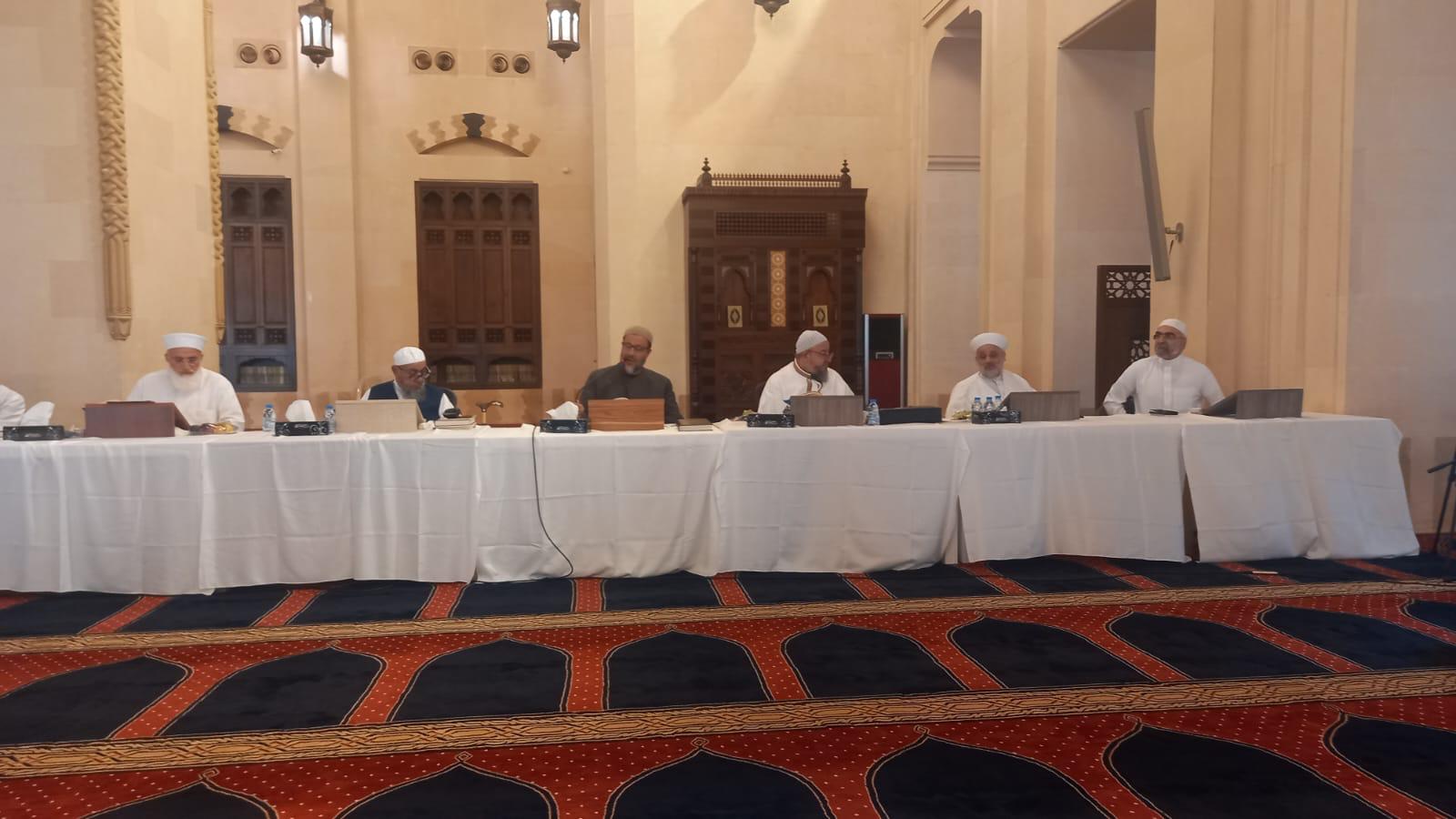
I had not prepared anything in advance for this gathering. However, since I was asked to speak about what Allah, Glorified and Exalted, has honoured us with, then all praise belongs to Allah.
I was about twenty years old when I first began serving the science of hadith, praise be to Allah. Our guide in this field was Shaykh ʿAbd al-Fattah Abu Ghuddah (may Allah have mercy on him). Although we did not sit with him extensively or study directly under him, we benefited greatly from reading his books and his critical editions.
We became deeply attached to the Shaykh’s scholarly editions, and Allah honoured us by enabling us to establish the Tamim Office for Editing Books and Manuscripts in Beirut. We gathered a number of brothers from among the students of knowledge and Shariah, and they worked together with us in the office. Among them was Shaykh Hamid, who helped us with reading manuscripts, establishing the correct text, and editing works, including those relating to the Shafi’i school and others. Allah blessed us with diligent students of knowledge.
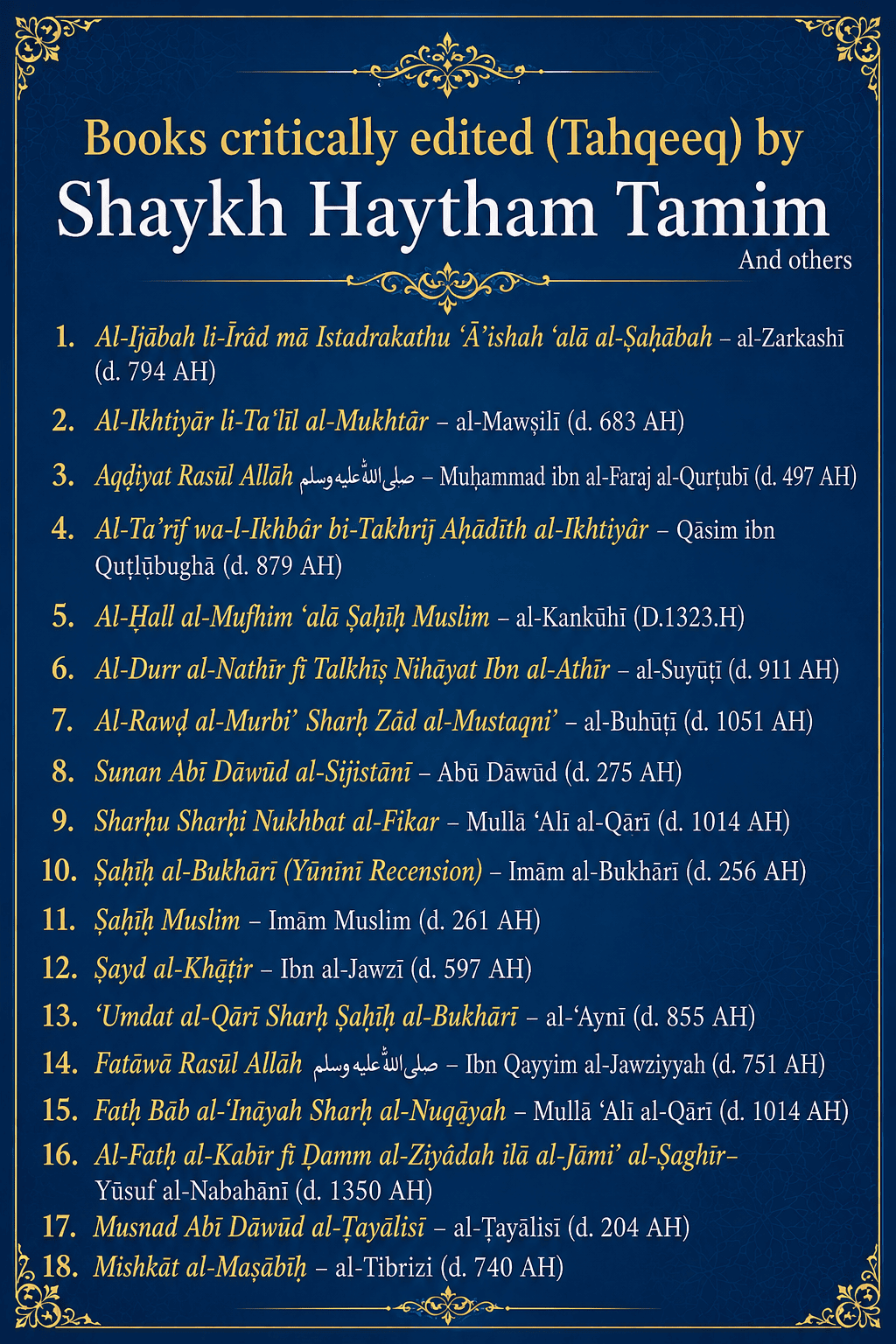
Among the first books we worked on, having first studied the Hanafi school, then the Shafi’i school, and later comparative fiqh in the Faculty of Shariah, was Mulla Ali al-Qari’s commentary on Ibn Hajar Al-Asqalani, Shahrhu Nukhbat al-Fikar.
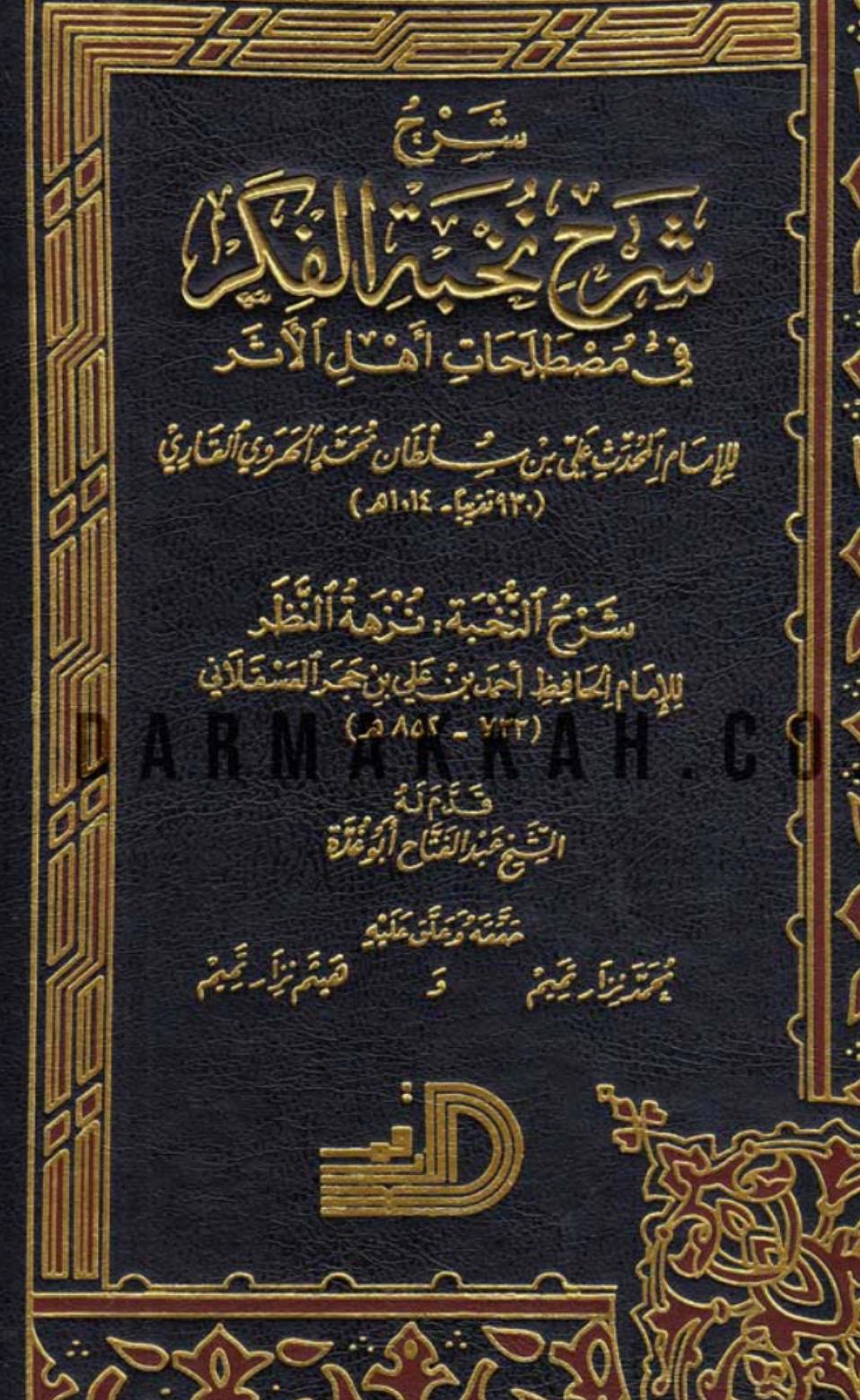
Mulla Ali al-Qari was an encyclopaedic scholar. His work exhausted us because he frequently quoted by meaning rather than verbatim. Verifying his citations required a great deal of effort. Nevertheless, we did our utmost to serve the book.
This became a blessed beginning for us. Allah honoured us further when Shaykh ʿAbd al-Fattah Abu Ghuddah wrote the introduction to the book, something he rarely did for published works. This was one of Allah’s favours upon us. The Shaykh also granted us a general and specific ijazah (authorisation) in hadith. This was around 1992.
After that, our teacher Shaykh Khalil al-Mays (may Allah have mercy on him) said to us:
“Young men, you’ve published Mulla Ali’s book. Why don’t you publish another one?”
We asked which one.
He replied:
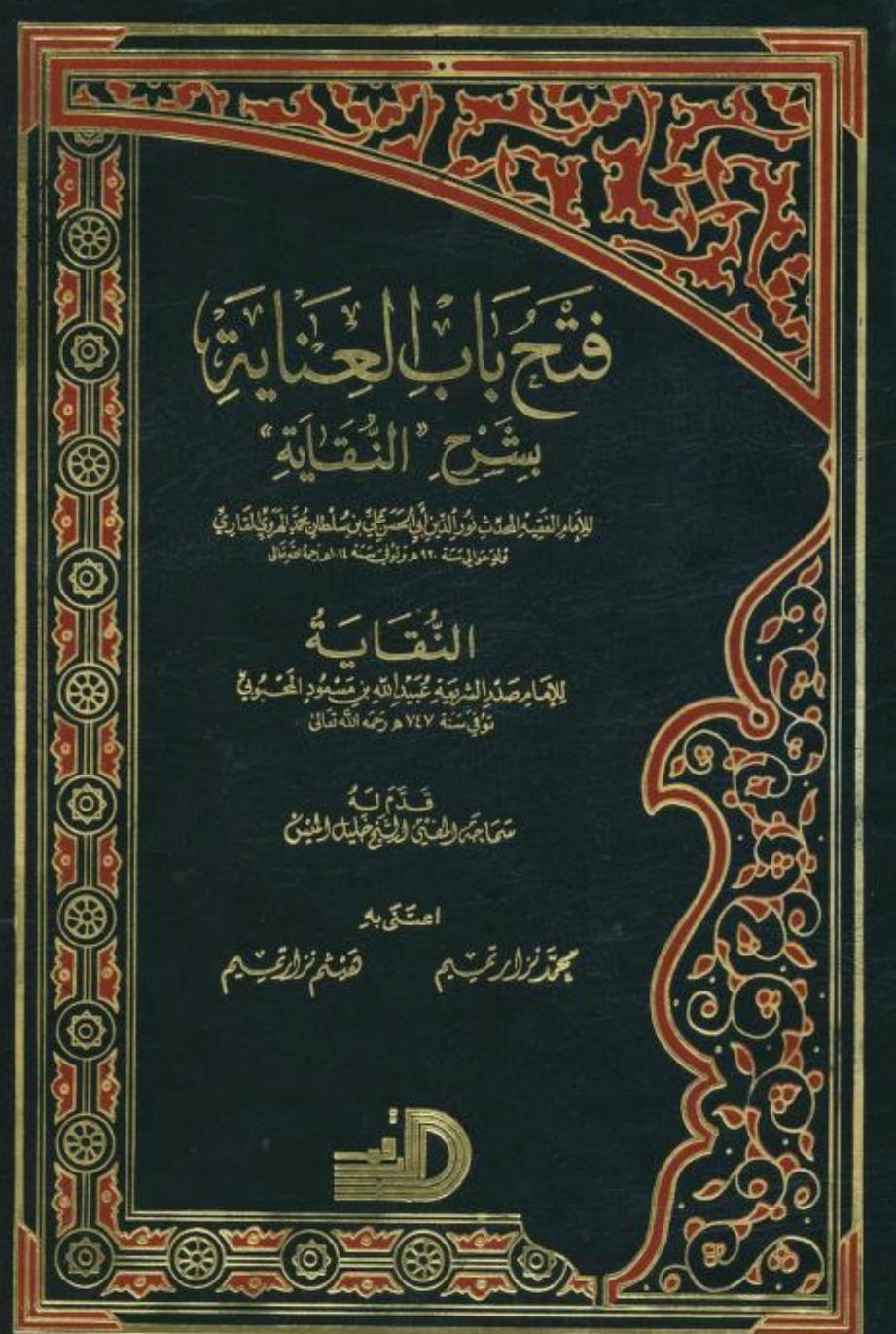
“Doesn’t Mulla Ali have Fath Bab al-’Inayah?”
We said yes.
He explained that Shaykh ʿAbd al-Fattah had begun editing the book back in the 1960s but had stopped after publishing only around five percent of it – essentially just the Book of Purification.
We replied:
“Shaykh, we don’t even have manuscripts. How can we possibly work on it?”
But when Allah wills something, He creates its means. While performing Hajj, Allah enabled us to purchase a rare lithographic edition printed in Pakistan or India, a beautiful two-volume set. Later Allah blessed us with another, different copy.
In those days obtaining manuscripts, or even photographs of manuscripts, was extremely difficult. Today you simply press a button and find a million manuscripts online. Back then it was one of the hardest parts of research.
We discovered through manuscript catalogues that a copy existed in Istanbul. However, the authorities were strict, and researchers were often prevented from obtaining photographs, especially Islamic researchers. But we were blessed that a Turkish brother named Engin studied with us in Damascus and every six months he managed to photograph another portion of the manuscript from the university and send it to us. May Allah reward him with goodness.
We regarded this as a sign that Allah wanted this book to be served. Our Shaykh said:
“Put your trust in Allah and begin.”
We did send a letter to Shaykh ʿAbd al-Fattah Abu Ghuddah seeking his permission and his blessing to work on the book and Alhamdulillah he did not mind.
There were around ten brothers in the office altogether, although only about five were working full-time on the project. Shaykh Khalil said it would be made a prescribed text for Azhar Lubnan so we did work on it for around three years and the book became a prescribed text at al-Azhar.
Financially, as we would say in English, we made peanuts from it. But you certainly don’t make money from publishing such books. But what were we seeking? Alhamdulillah, Allah placed blessing in serving these works.
Fathu Babil ‘Inayah Sharh An-Nuqayah became the second major book we published. Shaykh Khalil had remarkable insight. He wanted us to produce a work of evidence-based Hanafi fiqh.
He said:
“Produce for us a Hanafi fiqh book that presents the evidences.”
Mulla Ali had done exactly that. He presented the legal rulings and supported them with hadith.
So we relied upon Allah and began the work. It was genuinely demanding. Mulla Ali was not simply a Hanafi jurist. He would cite the evidence, explain how it proved the ruling, discuss different aspects of the proof, critique opposing views, expand upon the discussion, and sometimes even prefer an opinion outside the Hanafi school.
This comparative approach was one of the beautiful qualities of Mulla Ali’s scholarship. Of course, no book is free from passages that may be unclear or difficult. One observation from my years of living with Mulla Ali’s works may be useful for students who read him. Sometimes you come across wording that seems awkward or linguistically imperfect. It is tempting to think the manuscript is corrupt. In many cases, however, it is not a manuscript error at all. Rather, it reflects that Arabic was not Mulla Ali’s native language. At times you sense that something is missing from the expression or that the wording is not entirely smooth. This is not a criticism of Mulla Ali (Allah have mercy on him) but simply an observation based on long experience working with his books.
Another point is that he had memorised an enormous amount of material and often quoted from memory. He would frequently narrate texts according to their meaning rather than quoting them word for word. That made authenticating his references extremely difficult because we had to trace the original wording of the hadiths. Despite all of that, Allah enabled us to complete the work as we had promised our Shaykh. He was delighted with it.
He said:
“This should become a prescribed text at al-Azhar.”
That was, in effect, his endorsement of the book.
Another book that brought Shaykh Khalil great joy was I’laa As-Sunan by Tahanwi. He and many other scholars had long been searching for it. When it finally arrived in Beirut and the Shaykh received a copy, there was great happiness.
Another book we served was At-Ta’reef wal Ikhbaar bitakhreeji Ahadeeth Al-Ikhtiyar by the great Muhaddith Qasim bin Qutlubugha. Shaykh Khalil had a photocopy of the draft of the book in the hand writing of the author himself. We obtained the copy and began working on it.
We sought Allah’s help and worked on the book for approximately four years. We first established the text of al-Ikhtiyar itself. At that time, Shaykh Zuhayr al-Shawish (may Allah have mercy on him) the renowned scholar and manuscript collector, who founded Al Maktab al-Islami, the major Islamic publishing house, opened his library to us. It was filled with Hanafi manuscripts, including rare texts. I used to joke with him that Allah had made him subservient to preserve the Hanafi school in his library.
He gave me access to his collection of Hanafi works. We obtained manuscript copies of the original Hanafi texts: Al-Ikhtiyar li-Taʿlil al-Mukhtar – Abdullah bin Mahmoud al-Mawsili (d. 683 AH). So, we began working on the book. By Allah’s grace, a great deal of effort went into it. The completed work consisted of five volumes and was entitled al-Taʿrif wa-l-Ikhbar bi-Takhrij Ahadith al-Ikhtiyar. It took us four or five years to complete.
When the book was finished, it was prepared for printing. However, for financial reasons it was never printed. I recently purchased another edition of the same work, published in four volumes. I bought it about a month ago and felt deeply saddened because our own work had never appeared, even though we had completed everything.
We had also written an introduction of approximately 150 pages discussing the book and its details. Shaykh Abd al-Fattah Abu Ghuddah, may Allah have mercy on him, advised us concerning it. He contributed certain points, which we incorporated into the introduction, and corrected us on a number of matters, explaining that particular passages should be written differently.
We were still at the beginning of our path at that time. When you are young, you do not know very much and have not yet acquired experience. You simply write what is dictated or taught to you. He also corrected us regarding a point connected to Mulla Ali al-Qari’s commentary on Sharhu Sharhi Nukhbat al-Fikr.
The printed copy upon which we worked was regarded as one of the finest copies available at the time. It was considered one of the best surviving copies. Though we were frustrated that the old printed copy was hard to work with at times, our Shaykh pointed out, with his great adab and experience, that this was the best copy they had at the time, and so we mentioned this in the introduction.
By Allah’s grace, this was among the ways in which Allah honoured us by allowing us to serve the Sunnah of the Prophet ﷺ.
We have produced approximately twenty books in the service of the Sunnah of the Prophet ﷺ. One of our most recent publications was Imam al-Suyuti’s abridgement of a work on uncommon words found in hadith: Al-Durr al-Nathir fīi Talkhis Nihayat Ibn al-Athiīr – al-Suyuti (d. 911 AH). Al-Suyuti (may Allah have mercy on him) had condensed it from five to ten volumes into a single volume. We prepared it in the form of an alphabetically arranged dictionary, using colours and other features to make it accessible.
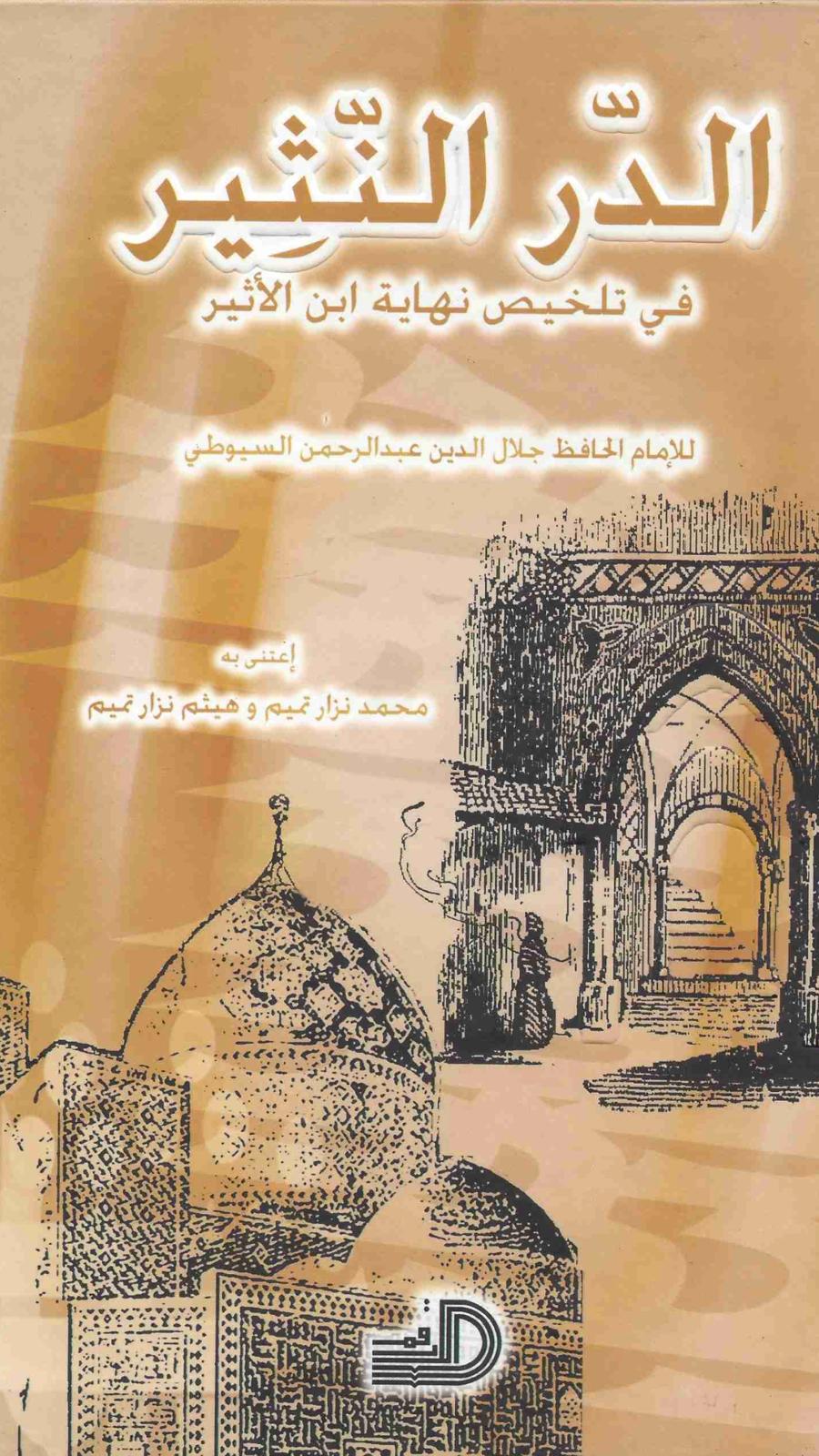
It is a beautiful, pleasant and easy-to-use volume. Praise be to Allah, the final publication came out very well. It was among the last works upon which we worked at Dar al-Arqam.
Another recent publication was released during Ramadan. I called it Forty Comprehensive Supplications of the Prophet ﷺ. In it, I gathered forty of the Prophet’s comprehensive supplications. They are forty precious prayers whose recitation never becomes tiresome. You can read them in the morning and again in the evening. It is a beautiful collection. We published it during Ramadan and also translated it here in London, in the United Kingdom. Students now read it in both Arabic and English.
That is a brief account of some of the ways in which Allah Almighty has honoured us. We also worked on Sahih al-Bukhari and Sahih Muslim. In fact, by Allah’s grace, we were the first to publish Sahih al-Bukhari in the world in a single volume. We then did the same with Sahih Muslim.
Our original idea was to publish all six canonical collections, Al-Kutub al-Sittah, in this form, but people with greater financial resources overtook us. They adopted the idea and produced similar editions themselves.
For our edition of Sahih al-Bukhari, we relied upon the manuscript recension of the great scholar al-Yunini, which is among the most precise and authoritative copies. We based our single-volume edition upon his recension.
Afterwards, we published Sahih Muslim and then Sunan Abi Dawud. The project stopped there. The edition of Jamiʿ al-Tirmidhi was close to completion, but the funding ceased and those responsible were no longer able to print it, so we left the project.
We also worked on Fayd al-Bari by the great scholar Anwar Shah al-Kashmiri. The book contains remarkable insights and rare discussions unlike those found elsewhere. It is a beautiful work. There are, of course, some matters upon which one might offer corrections, but these are relatively minor.
The work contains passages in old Persian, Urdu and Arabic, as well as a great deal of other material. We ask Allah the Almighty to accept from us and make it purely for His sake.
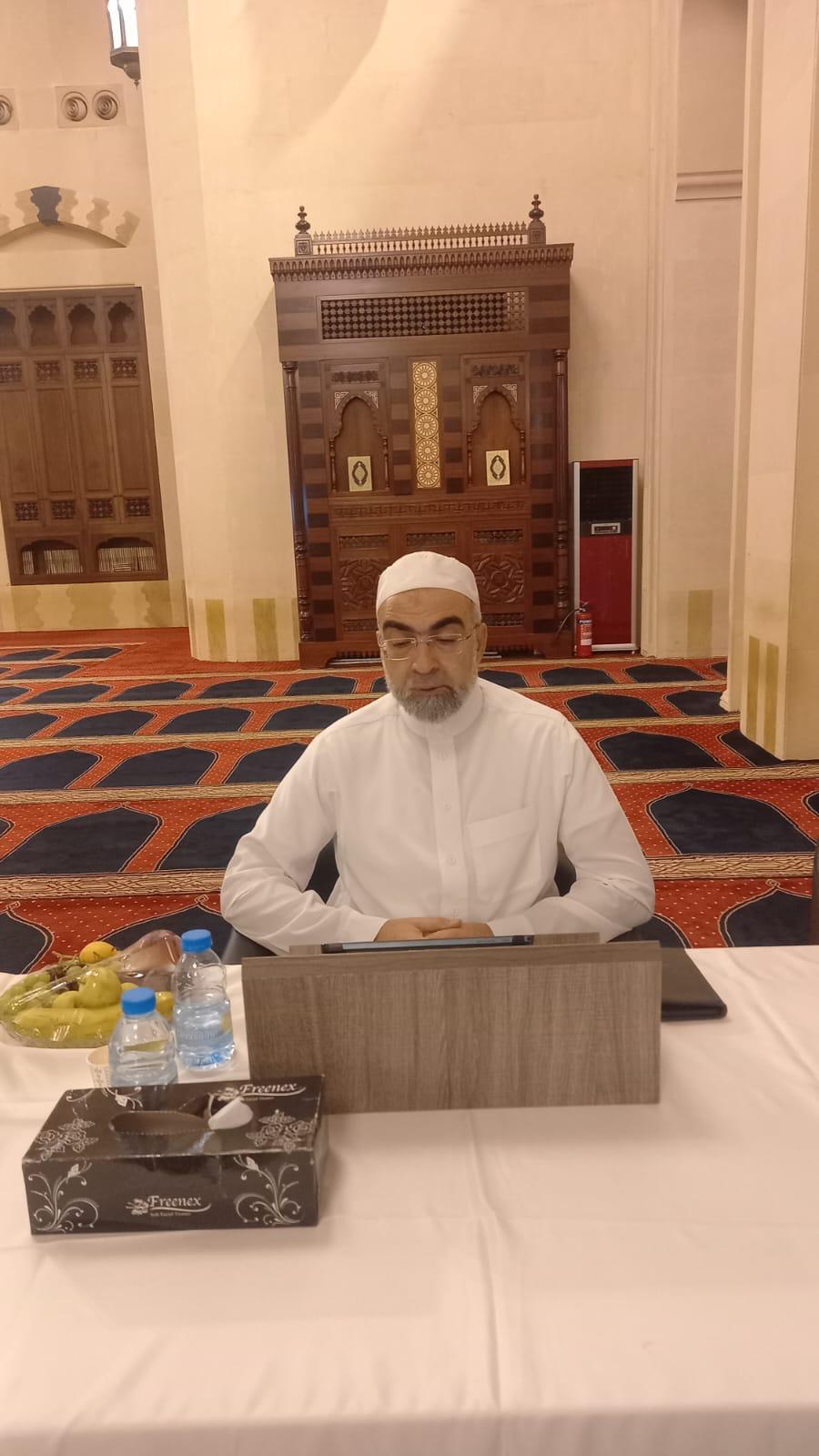
A short talk during the circle of reading the Musnad of Imam Ahmad in Beirut at Muhammad Al-Ameen mosque. 25th July 2026.